

HIGH-TEMPERATURE SOLUTIONS

Actividades industriales Alfran

Refractory

Actividades industriales Alfran

Insulation

Actividades industriales Alfran

Fire-proofing

Actividades industriales Alfran

Heat Treatment

Actividades industriales Alfran

Other activities

INDUSTRIES

alfran® is the first international Company to offer heat-resistance, insulation, and passive protection turnkey solutions for most industrial applications.

Actividades industriales Alfran

CEMENT

We are a reference in the worldwide cement industry. We specialize in high-performance refractory concretes.

Actividades industriales Alfran

Iron and Steel

We cover all the high temperature range of activities, being able to work independently and efficiently in all types of projects for the steel industry.

Actividades industriales Alfran

Non-Ferrous Metals

Over the last 50 years, alfran® has become a key supplier in the copper and aluminum industry, among other non-ferrous metals industries.

Actividades industriales Alfran

Energy

We offer innovative solutions for the power generation industry, as well as incineration, biomass, and chimney reforms.

Actividades industriales Alfran

Oil & Gas

alfran® designs, manufactures, supplies and installs a large range of materials and solutions for petrochemical and Oil & Gas plant applications.

Actividades industriales Alfran

Glass

alfran® provides products and installation services with high added value, with powerful business partnerships in the materials supply within the glass industry.

Actividades industriales Alfran

Others

OUR CLIENTS TRUST US

PRESENCE IN

5

CONTINENTS

OVER

900

DIRECT EMPLOYEES

OVER

1000

TURNKEY PROJECTS

OVER

2000

RECURRING CLIENTS

RECENT PROJECTS

We implement high-temperature solutions in all our projects for the industrial sector.
We always use the most advanced technology and strive to meet our clients’ cost-effectiveness expectations.

Clear Filters
Supply and erection of a steel structure, installation of refractory material and hot joint sealing in a glass furnace, State of Mexico, Mexico
5 May, 2026 in GLASS, MEXICO
HGV1 Project – Owens America, Guadalajara Plant, Mexico
5 May, 2026 in GLASS, MEXICO
REPSOL’S ADVANCED BIOFUELS PLANT IN CARTAGENA (SPAIN)
11 March, 2026 in SPAIN
Saudi Aramco Riyadh Refinery Division (RRD) Shutdown, Saudi Arabia
13 February, 2026 in MIDDLE EAST

LATEST NEWS

01 Jul: Shotcrete Refractory Concrete: A Technical Guide for High-Temperature Industrial Applications

What Is Shotcrete Refractory Concrete?

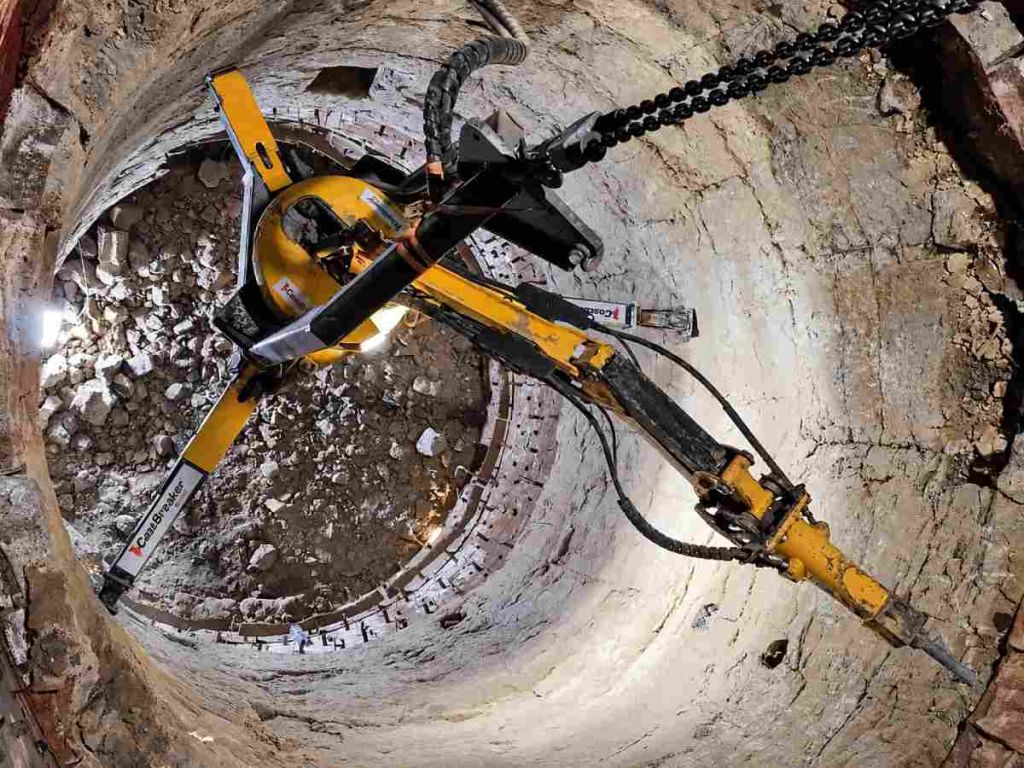
Shotcrete refractory concrete refers to the application of shotcrete technology—the pneumatic projection of material at high velocity onto a surface—using specially formulated materials designed to withstand high temperatures, thermal shock, abrasion, and chemical attack in demanding industrial environments.

It is a material engineered to operate inside industrial equipment where service conditions would cause conventional concrete to fail within just a few operating cycles.

Shotcrete vs. Other Refractory Installation Techniques: When Is It the Right Choice?

Before spraying a single kilogram of material, the key question is: Is shotcrete the best installation method for this specific application? The answer is not always yes.

Shotcrete vs. Refractory Brick

Pre-fired and sintered refractory bricks generally offer superior abrasion resistance in areas exposed to direct impact from molten materials, and their performance against certain chemical attacks can be better.

However, brick installation is slower and less suitable for irregular or complex geometries, as well as areas with difficult access.

Shotcrete becomes the preferred option when geometry is complex, intervention speed is critical, or access limitations make manual installation difficult.

Shotcrete vs. Vibrocasting

Vibrocasting, or conventional cast-in-place installation with vibration, produces a dense and homogeneous lining. It is recommended when lining thickness is substantial and site conditions allow for formwork installation.

Its main limitation is that it requires formwork and longer curing times.

Shotcrete is the preferred solution when there is insufficient space for formwork, when working on vertical or inclined surfaces, and when shutdown schedules are tight.

Shotcrete vs. PREFABRICATED REFRACTORY SHAPES

Prefabricated refractory components provide dimensional consistency and factory-controlled quality, making them ideal for areas subjected to highly specific and repetitive operating conditions.

However, they are generally slower to install and are not well suited to complex or unique geometries.

Shotcrete offers advantages in transition areas, joints, localized repairs, and free-form surfaces where standard prefabricated shapes cannot provide an optimal fit.

In practice, large-scale industrial projects often combine all three techniques. Understanding when to apply each one is part of the value provided by a specialized partner such as alfran® through our turnkey refractory solutions.

The Variables That Truly Determine Performance

Refractory shotcrete does not fail because of the material itself. It fails because of poor execution.

The following variables make the difference between a lining that withstands operational cycles and one that begins to deteriorate prematurely.

1. Surface Preparation

A contaminated surface containing slag residues, dust, or other contaminants compromises adhesion from the very beginning.

Proper preparation—whether through mechanical cleaning or high-pressure air/water blasting, depending on the application—is just as critical as the material being applied.

2. Water-to-Concrete Ratio

In dry-process gunning, the operator controls the amount of water added at the nozzle.

Excessive water reduces mechanical strength and increases shrinkage. Insufficient water causes excessive rebound and material loss.

This variable depends entirely on the skill and experience of the nozzleman.

3. Rebound Control

Rebound—the material that does not adhere and falls away—has a different composition from the installed lining.

It is typically richer in coarse aggregates and poorer in fines and binders.

Rebound material should never be reused or incorporated into the lining. Its continuous removal and proper management during application are essential to ensuring final lining quality.

4. Dry-Out Prior to Start-Up

This is the most common—and most expensive—mistake.

Refractory shotcrete contains mixing water that must be removed gradually before the equipment reaches operating temperature.

Heating too quickly generates steam inside the lining, potentially causing delamination or even partial explosive spalling.

The curing protocol and heating schedule must be specifically designed for each project.

At alfran®, these procedures are integrated into the commissioning process of every refractory installation.