



Refractory lining is one of the most critical yet least visible components of any high-temperature industrial installation. It is found inside equipment such as furnaces, reactors, converters and steel ladles, amongst others. It cannot be seen from the outside. It does not make the headlines. But when it fails — when a lining cracks, erodes or flakes off prematurely — the consequence is immediate: plant shutdown, emergency repairs and production losses that can exceed the costs of several years’ preventive maintenance.
This article explains what refractory lining is, what types of materials are available, how to select the right one for each application, how to install it correctly, and what factors determine its service life. It is written from the perspective of over 50 years’ experience installing linings in the world’s most demanding industries.
WHAT IS REFRACTORY LINING?
A refractory lining is the internal coating system made of heat-resistant materials used in industrial equipment subjected to high temperatures — such as furnaces, reactors, boilers, ladles, cyclones and calciners, amongst others. Its main function is threefold: to protect the equipment’s metal structure from the extreme heat generated by the process, chemical corrosion in the working environment and mechanical wear caused by the process; to control the system’s thermal efficiency, minimising heat loss to the outside; and to ensure operational safety by preventing molten material, gases or slag from penetrating the equipment’s casing.
A well-designed, well-installed and well-maintained refractory lining is not an expense: it is an investment that determines the duration of the production run, the energy efficiency of the process and the safety of the people working around the equipment.
STRUCTURE OF A REFRACTORY LINING: THE LAYERS OF THE SYSTEM
Aunque en la práctica popular se habla de “el refractario” como si fuera un único material, un revestimiento refractario de alta prestación, generalmente es un sistema multicapa, donde cada material cumple una función específica.
- Working layer. This is the material directly exposed to the most severe conditions of the process: maximum temperature, contact with molten metals or slag, flow of corrosive gases, and wear caused by impact, abrasion or erosion. It requires materials with the highest refractoriness, chemical resistance and mechanical strength at high temperatures.
- Safety or permanent layer. This is situated between the working face and the insulation. It is not always present in all refractory designs, but serves to slow the advance of the heat front or molten metal should the working layer degrade, allowing time to detect the problem before it critically affects the process and/or causes degradation of the metal shell.
- Insulation layer. Its purpose is to reduce heat loss to the outside and to control the process temperature and that of the other layers, including the metal casing. It uses materials with low thermal conductivity: lightweight insulating bricks, ceramic fibre, calcium silicate panels, microporous panels or insulating concretes. The lower the heat transfer through this layer, the lower the process’s energy consumption.
The correct combination of these three layers — materials, thicknesses, joints and expansion joints — determines how the assembly behaves under actual operating conditions.
TYPES OF MATERIALS FOR REFRACTORY LININGS
The selection of the refractory material is the most critical decision in the design process. There is no universal material or combination of materials: each application has its own specific environmental conditions (temperature, chemical atmosphere, mechanical load and operating regime) which will determine the most suitable lining.
REFRACTORY BRICKS.
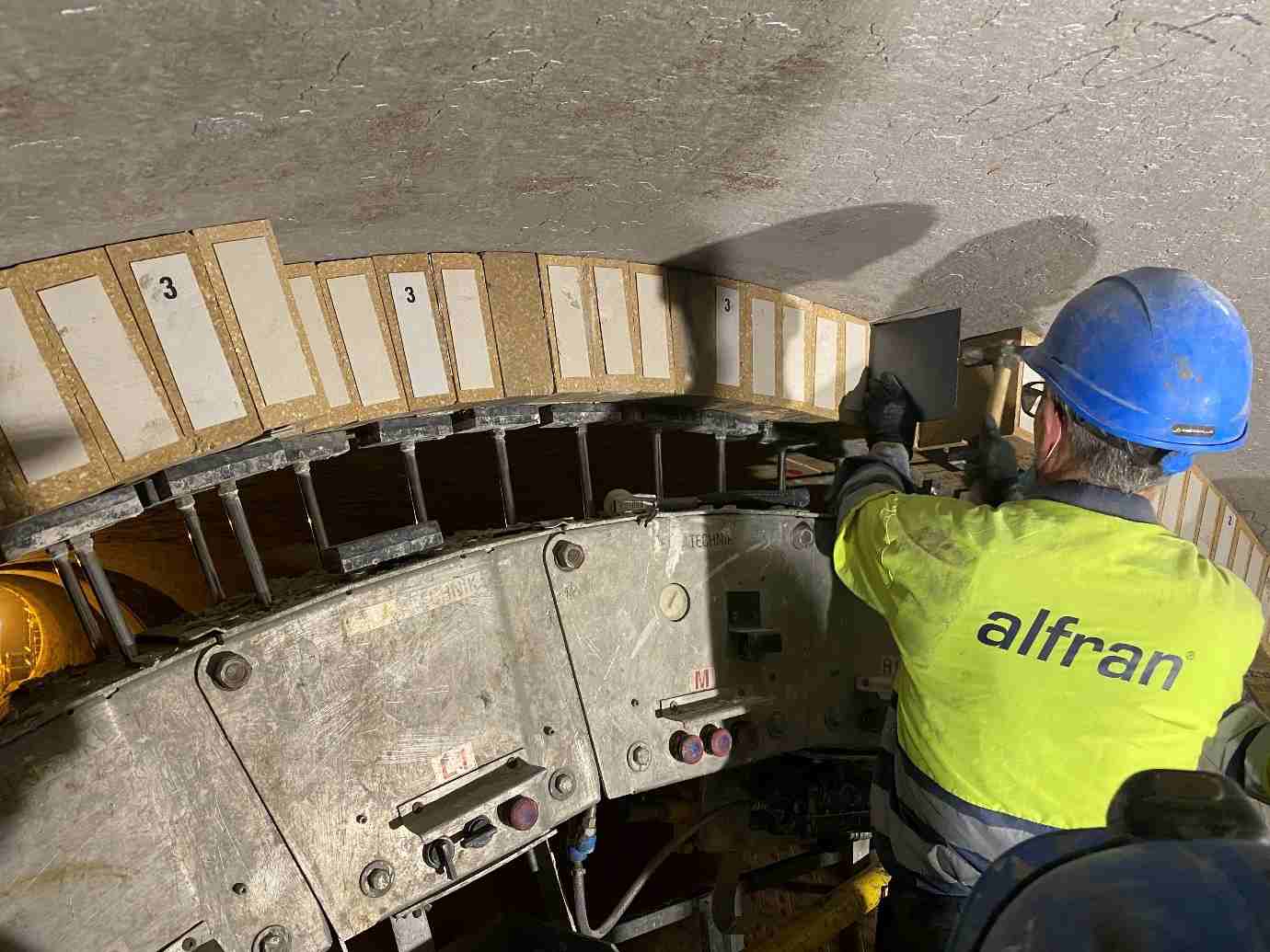
These are precisely shaped components, manufactured by pressing and firing at high temperatures. Their main advantage lies in their dimensional consistency and mechanical strength, which are achieved through the firing process. The most common types are refractory clay bricks, containing 30–45 per cent Al₂O₃, suitable for temperatures up to approximately 1,400 °C; high-alumina bricks, with Al₂O₃ contents exceeding 45 per cent and reaching up to 99 per cent in the case of corundum, used in areas subject to high temperatures and high chemical aggression; magnesia and magnesia-chromium bricks, which are basic materials for areas in contact with basic slags or alkaline metal melts, commonly found in the steel industry and in the clinkerisation zone of cement kilns; and silicon carbide (SiC) bricks, with exceptional resistance to abrasion and erosion, used where mechanical wear is the main limiting factor.
MONOLITHIC REFRACTORY CONCRETES.
These are supplied as a dry mix and installed whilst still plastic — by vibration, pumping or spraying — forming a joint-free lining that perfectly conforms to the shape of the equipment, thereby eliminating the main weaknesses associated with brickwork. Conventional high-cement-content concretes set hydraulically using calcium aluminate cement; they are easy to install but exhibit inferior properties at high temperatures due to the low-refractoriness phases derived from the cement. Low-cement-content (LCC) concretes significantly reduce the cement content, improve thermomechanical behaviour and increase density. Cement-free (NCC) concretes use alternative binders such as colloidal silica or phosphates and offer maximum thermomechanical performance for the most demanding conditions.
REFRACTORY PLASTIC MIX.
These are moist mixtures with a plastic consistency, which are installed by manual or mechanical tamping. They are particularly useful in areas with complex geometries, for localised repairs, at tap holes and in areas where installation by vibration or pumping is not feasible.
CERAMIC FIBRE.
Ceramic fibre products have very low thermal conductivity and low thermal inertia, making them particularly suitable for areas subject to frequent thermal cycles and for use as backing insulation layers. They are not suitable for areas in direct contact with molten materials or subject to severe abrasion. They are supplied in the form of modules, blankets, boards and cords.
BACKING INSULATION MATERIALS.
For the insulation layer, the most common materials are lightweight insulating bricks (IFB, insulating fire bricks), calcium silicate panels, microporous panels and aerogel panels. There are also insulating concretes, which, as unshaped materials, can be easily adapted to the equipment and allow for rapid installation. The choice depends on the thermal regime that needs to be ensured, and must meet the desired temperature objective for the casing.
CRITERIA FOR SELECTING THE APPROPRIATE REFRACTORY LINING
The most common mistake in the design of a refractory lining is to select the cheapest material, or the best-known one, rather than the material best suited to the specific process conditions. The criteria that must be systematically assessed are as follows.
- Maximum operating temperature and thermal profile.
- Chemical atmosphere of the process.
- Mechanical loads and type of wear.
- Thermal regime: continuous operation or cyclic operation.
- Logistics and available installation method.
- Total cost of ownership (TCO).
Engineering and thermal simulation enable the behaviour of the lining to be analysed prior to installation, its design to be optimised, and the most suitable combination of materials to be selected for each process. Among other techniques, Alfran applies heat transfer modelling and the design of multi-layer systems.
METHODS FOR INSTALLING REFRACTORY LININGS
The quality of the installation is just as crucial as the quality of the material. A top-quality refractory that is poorly installed will fail sooner than a medium-quality one that is well installed. The main methods are:
- Brick laying. In dry-joint installations, the main advantages are stability during the first firing and the absence of a pre-drying process. The main drawback remains the time required for installation.
- Vibro-compaction. The concrete is mixed with the application fluid, poured into formwork and compacted using an immersion vibrator. It provides excellent mechanical properties when carried out correctly. Controlling the liquid-to-mix ratio is critical to the final result.
- Pumpcrete. Once mixed, the concrete is transported continuously through pressurised pipes and poured directly into the installation area. This method allows access to hard-to-reach areas, ensures uniformity, reduces the need for labour and shortens installation times. Particularly useful during plant shutdowns with tight time windows.
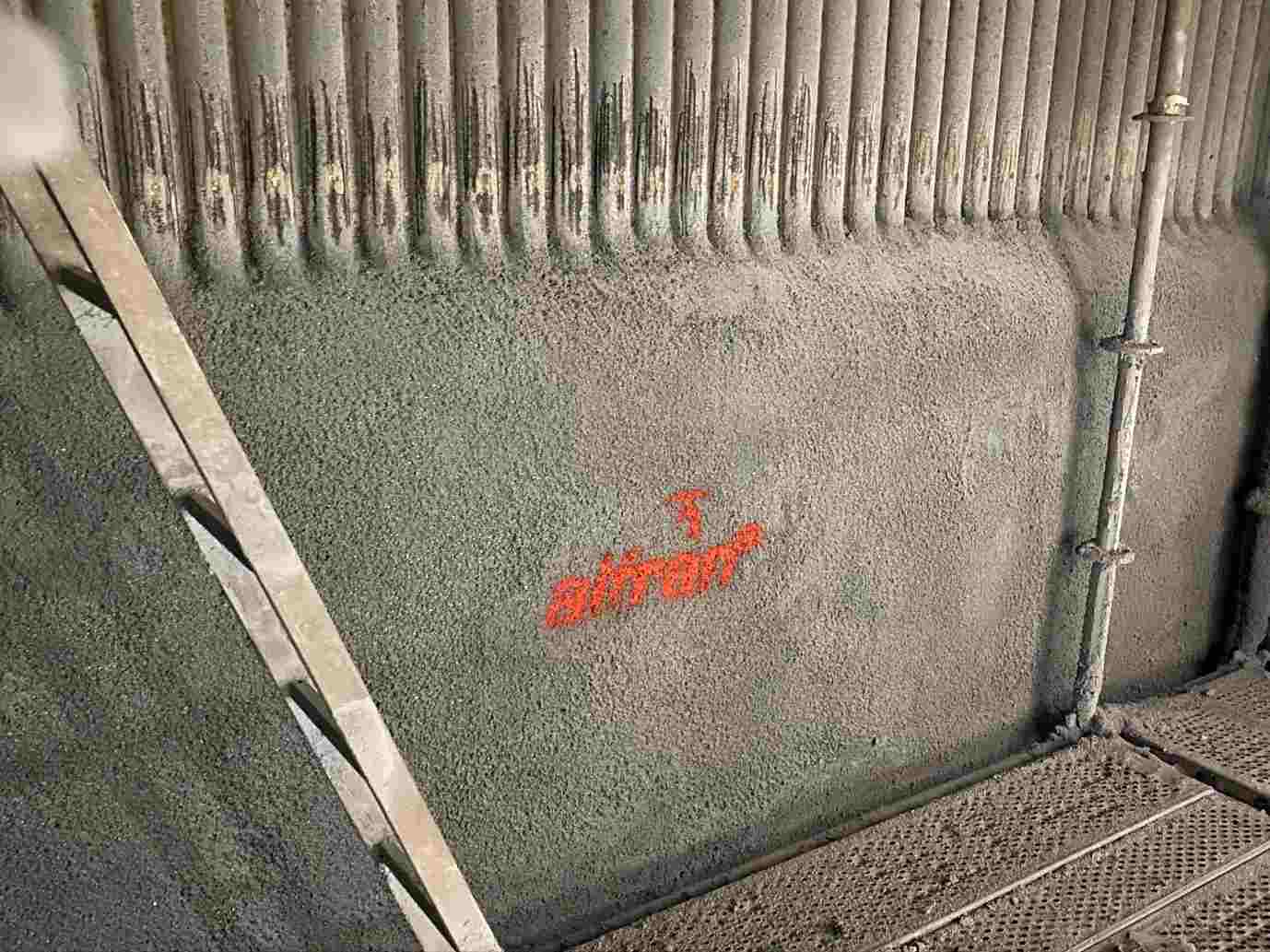
- Wet spraying (Shotcrete). The mixture is sprayed at high speed onto the installation surface. This allows large areas to be covered quickly and complex geometries to be accessed without the need for formwork.
- Dry gunning. The dry material is conveyed pneumatically and is usually mixed with water at the nozzle at the applicator’s discretion. Commonly used for localised repairs and thin linings with low thermomechanical requirements.
ALFRAN®: REFRACTORY LININGS WITH A ‘TURNKEY’ SERVICE, OPERATING ACROSS 5 CONTINENTS
At ALFRAN®, we have been designing, supplying and installing refractory linings for the world’s most demanding industries for over 50 years. We are the first international company capable of offering ‘turnkey’ lining solutions that integrate refractories, insulation, fireproofing and heat treatment within a single contract.
We work with all the most innovative installation technologies and have specialised equipment and qualified staff to carry out projects anywhere in the world: Europe, the Americas, the Middle East, Africa and Asia.
CAN ALFRAN® HANDLE THE DESIGN, MANUFACTURE, SUPPLY AND COMPLETE INSTALLATION?
Yes. Alfran® offers a fully turnkey service: from the analysis of process conditions and the design of the lining system, through to the manufacture and supply of materials, installation by our own teams and qualified staff, and monitoring during commissioning. We operate across more than five continents and have experience across all industries requiring high-temperature solutions.