


What Is Shotcrete Refractory Concrete?
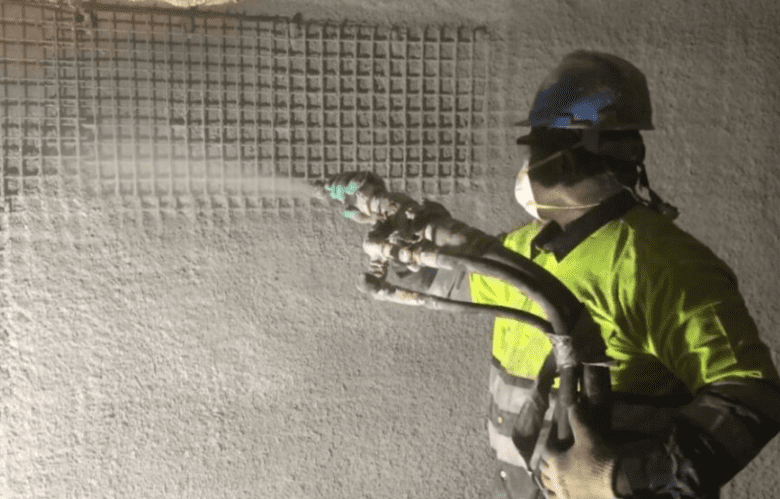
Shotcrete refractory concrete refers to the application of shotcrete technology—the pneumatic projection of material at high velocity onto a surface—using specially formulated materials designed to withstand high temperatures, thermal shock, abrasion, and chemical attack in demanding industrial environments.
It is a material engineered to operate inside industrial equipment where service conditions would cause conventional concrete to fail within just a few operating cycles.
Shotcrete vs. Other Refractory Installation Techniques: When Is It the Right Choice?
Before spraying a single kilogram of material, the key question is: Is shotcrete the best installation method for this specific application? The answer is not always yes.
Shotcrete vs. Refractory Brick
Pre-fired and sintered refractory bricks generally offer superior abrasion resistance in areas exposed to direct impact from molten materials, and their performance against certain chemical attacks can be better.
However, brick installation is slower and less suitable for irregular or complex geometries, as well as areas with difficult access.
Shotcrete becomes the preferred option when geometry is complex, intervention speed is critical, or access limitations make manual installation difficult.
Shotcrete vs. Vibrocasting
Vibrocasting, or conventional cast-in-place installation with vibration, produces a dense and homogeneous lining. It is recommended when lining thickness is substantial and site conditions allow for formwork installation.
Its main limitation is that it requires formwork and longer curing times.
Shotcrete is the preferred solution when there is insufficient space for formwork, when working on vertical or inclined surfaces, and when shutdown schedules are tight.
Shotcrete vs. PREFABRICATED REFRACTORY SHAPES
Prefabricated refractory components provide dimensional consistency and factory-controlled quality, making them ideal for areas subjected to highly specific and repetitive operating conditions.
However, they are generally slower to install and are not well suited to complex or unique geometries.
Shotcrete offers advantages in transition areas, joints, localized repairs, and free-form surfaces where standard prefabricated shapes cannot provide an optimal fit.
In practice, large-scale industrial projects often combine all three techniques. Understanding when to apply each one is part of the value provided by a specialized partner such as alfran® through our turnkey refractory solutions.
The Variables That Truly Determine Performance
Refractory shotcrete does not fail because of the material itself. It fails because of poor execution.
The following variables make the difference between a lining that withstands operational cycles and one that begins to deteriorate prematurely.
1. Surface Preparation
A contaminated surface containing slag residues, dust, or other contaminants compromises adhesion from the very beginning.
Proper preparation—whether through mechanical cleaning or high-pressure air/water blasting, depending on the application—is just as critical as the material being applied.
2. Water-to-Concrete Ratio
In dry-process gunning, the operator controls the amount of water added at the nozzle.
Excessive water reduces mechanical strength and increases shrinkage. Insufficient water causes excessive rebound and material loss.
This variable depends entirely on the skill and experience of the nozzleman.
3. Rebound Control
Rebound—the material that does not adhere and falls away—has a different composition from the installed lining.
It is typically richer in coarse aggregates and poorer in fines and binders.
Rebound material should never be reused or incorporated into the lining. Its continuous removal and proper management during application are essential to ensuring final lining quality.
4. Dry-Out Prior to Start-Up
This is the most common—and most expensive—mistake.
Refractory shotcrete contains mixing water that must be removed gradually before the equipment reaches operating temperature.
Heating too quickly generates steam inside the lining, potentially causing delamination or even partial explosive spalling.
The curing protocol and heating schedule must be specifically designed for each project.
At alfran®, these procedures are integrated into the commissioning process of every refractory installation.
The Importance of the Shotcrete System: Material Alone Is Not Enough
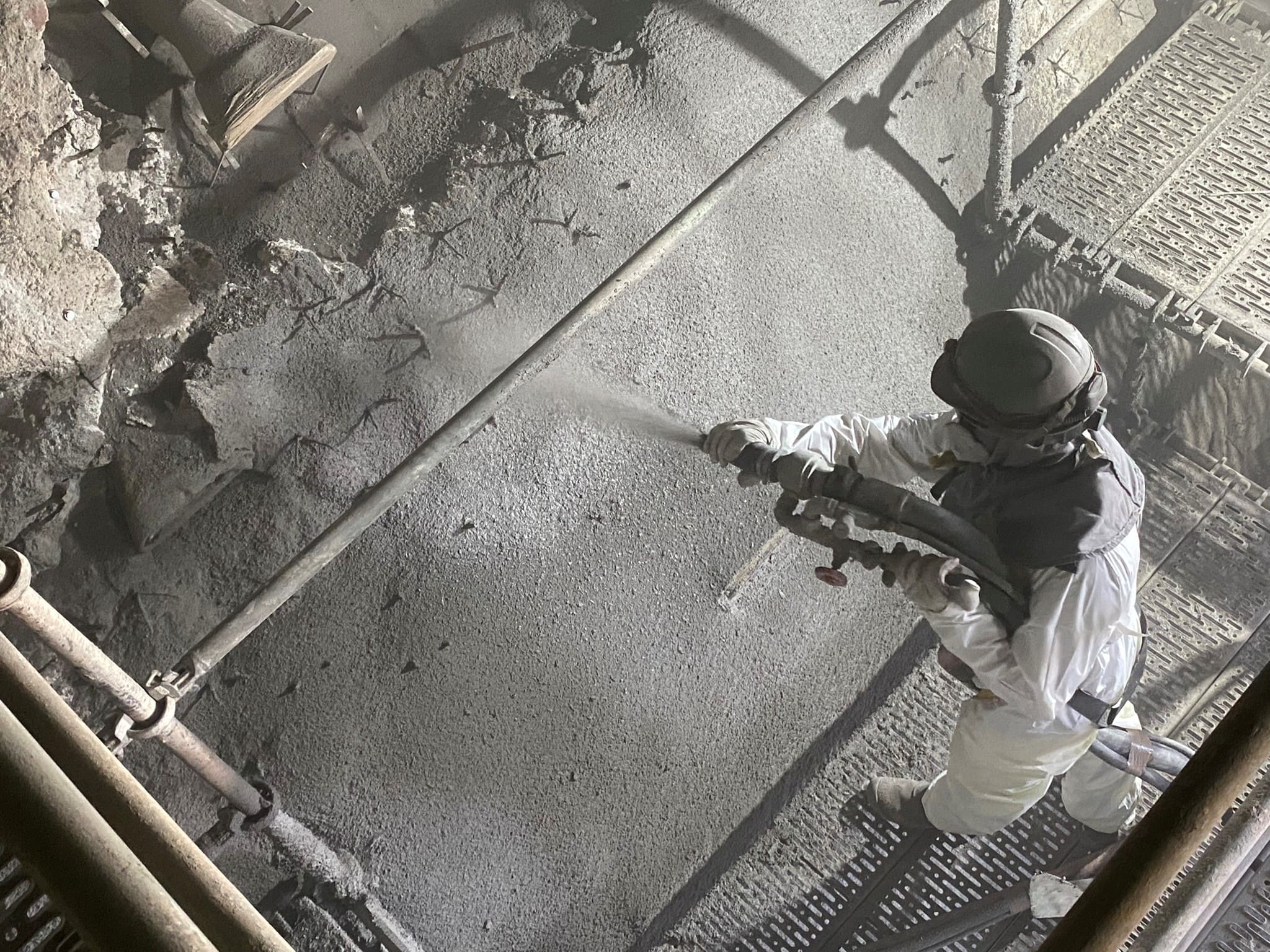
The quality of the final result depends as much on the application system as on the material itself.
Shotcrete technology has evolved significantly in recent years. Modern wet-process systems provide more precise control of material delivery, reduced dust generation, and greater lining homogeneity.
At alfran®, we have developed alfranjet, our proprietary wet-shotcrete system optimized for high-performance refractory materials.
You can learn more about its operation in our article on refractory concrete pumping systems for different industries.
For dry-process applications, we offer High Gun, a system specifically designed for difficult-access areas and smaller-volume installations.
Selecting the right equipment—and experienced operators capable of using it effectively—is part of the engineering process, not a secondary consideration.
Refractory Shotcrete Backed by Technical Expertise: The alfran® Approach
Proper application of refractory shotcrete requires material expertise, process control, and experience with the specific industrial equipment being serviced.
All three elements are equally important, and the absence of any one of them can compromise performance.
For more than 50 years, alfran® has combined proprietary materials developed through R&D, state-of-the-art installation systems, and specialized teams with extensive field experience across the industries we serve, including cement, steel, aluminum, Oil & Gas, energy, and many others.
With operations on five continents and more than 2,000 recurring customers, our objective remains the same: ensuring that every refractory lining delivers maximum performance for the longest possible service life.
Do you have a planned shutdown or equipment that requires evaluation? Contact our technical team and we will prepare a solution tailored to your specific requirements.