



Refractory materials are the unsung heroes that underpin industrial processes operating at high temperatures. Without them, entire sectors could not function safely or efficiently. From metallurgy to power generation, their role is essential for protecting equipment, optimizing processes, and extending the service life of facilities.
In this article, we examine which industries use refractory materials and why they need them.
Why are refractory materials indispensable?
Refractories enable furnaces, boilers, reactors, and combustion systems to operate continuously in environments where temperatures easily exceed 1,200 °C. Their main functions include:
- Protection against thermal and mechanical wear
- Resistance to chemical attack
- Thermal insulation
- Reduced energy consumption
- Extended equipment lifespan
Without these specialized materials, industrial processes would suffer constant downtime, production losses, and a significant increase in risks.
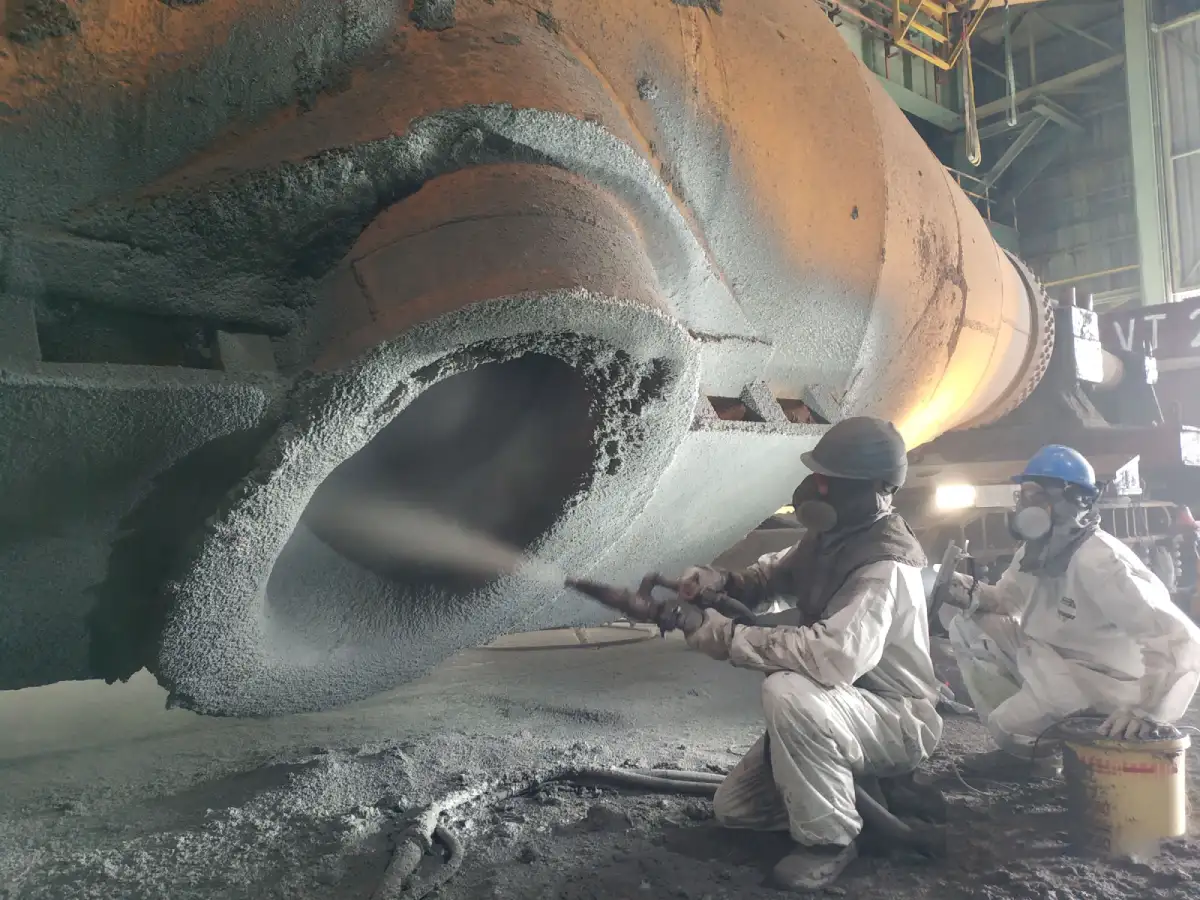
Major industries that use refractory materials
1. Cement industry
Clinker production requires temperatures exceeding 1,400 °C.
Refractories protect:
- Rotary kilns
- Cyclones
- Calciners
- Coolers
They must also withstand frequent thermal shocks and highly corrosive environments.
2. Iron and steel manufacturing
Refractories withstand extreme temperatures in:
- Electric arc furnaces
- Converters
- Molten steel ladles
- Reheating tunnels
In addition, they must resist corrosion caused by slag, fluxes, and gases.
3. Non-ferrous metallurgy (copper, aluminum, and others)
Both molten aluminum and copper require refractories with:
- High chemical resistance
- Excellent insulation
- Durability against thermal shocks
- Low porosity to prevent metal contamination
Corrosion is one of the main challenges in this sector.
4. Energy, Biomass, and Incineration
Power plants use refractories in:
- Boilers
- Furnaces
- Turbines
- Stacks
Energy efficiency depends directly on the quality of thermal insulation.
5. Oil & Gas
Refractories must withstand:
- Aggressive chemical attacks
- Extreme temperatures
- Sudden temperature changes
They are used in:
- Refinery furnaces
- Crackers
- Reactors
- Columns and process units
In this sector, safety and operational continuity are top priorities.
6. Glass Industry
Here, refractories are required to have:
- Extreme resistance to chemical wear
- Ability to withstand molten glass baths
- Dimensional stability
7. Other industries that also use refractories
- Thermal recycling plants
- Foundries
- Nuclear power plants
- Minerals and ceramics
- Chemical plants
In all of these, the need is the same: to ensure process continuity without compromising safety.
Current Challenges in the Use of Refractory Materials
Industries are demanding refractories with:
- Greater energy efficiency
- Lower environmental impact
- Superior durability
- Development of advanced formulations (shotcrete, metal-ceramic composites)
- Safer and faster installation
Refractory materials are essential for numerous industries to operate safely, efficiently, and continuously.
Alfran, with over 80 years of experience, has established itself as an international leader in high-temperature solutions, offering state-of-the-art products and turnkey services tailored to each sector.