


In an industry where every degree counts, advanced thermal engineering has become an essential tool for improving efficiency, extending equipment life, and reducing operating costs.
Therefore, in your high-temperature projects, thermal control is no longer just a necessity: it is a competitive advantage. If you are wondering why, this article is for you.
From refractory expertise to complete engineering solutions
Today’s industrial companies are looking for a turnkey approach to their thermal installations. In this context, thermal engineering ranges from the design of refractory linings and insulation to controlled heat treatments, creating synergy between materials, processes, and performance.
This integration makes it possible to anticipate thermal behavior, reduce energy losses, and improve the reliability of the entire operation, especially in cement, steel, and power plants.
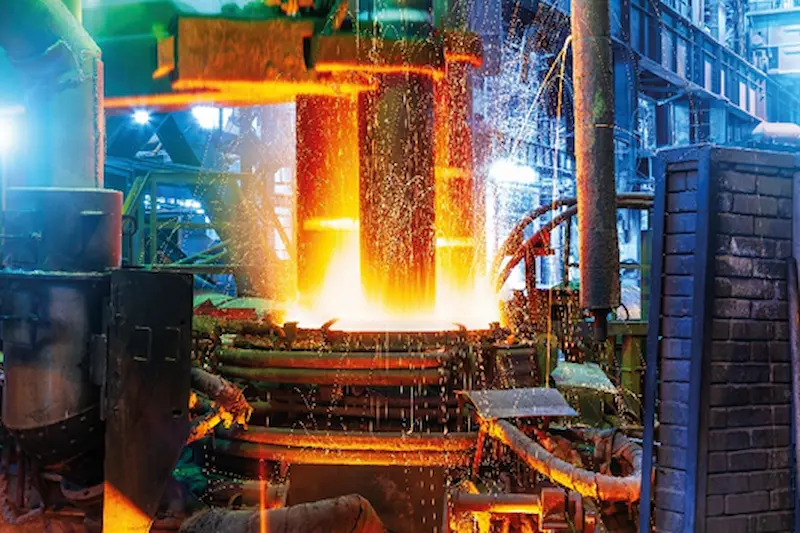
![Barra de acero al rojo vivo durante proceso de laminado en planta industrial]()
 Keys to efficient thermal engineering
Thermal diagnosis and modeling
The first phase consists of digitally simulating heat behavior at each critical point in the system. Thanks to thermal modeling and thermographic analysis tools, it is possible to detect inefficiencies before they appear.
Selection of dense refractory and insulating materials
Effective thermal design depends on choosing materials that are suitable for the temperature, work cycles, and chemical agents involved. High-tech refractory materials, combined with thermal insulation solutions, ensure a balance between protection, efficiency, and durability.
Control and traceability in execution
Monitoring using temperature sensors and remote control ensures the stability of the thermal process. Modern systems allow the evolution of heat to be monitored during the treatment or drying of materials, reducing risks and optimizing downtime.
Direct benefits for industry
An advanced approach to thermal engineering brings tangible advantages:
- Reduced energy consumption in high-temperature equipment.
- Increased durability of refractory linings and structural components.
- Fewer unplanned shutdowns thanks to continuous monitoring.
- Industrial sustainability, by reducing emissions and improving overall efficiency.
Thermal engineering as a bridge to sustainability
Thermal efficiency not only impacts the performance of industrial plants, but also their environmental footprint. Every improvement in heat control translates into lower energy demand and a real commitment to the Sustainable Development Goals (SDGs).
Advanced thermal engineering represents the next step in the evolution of high-temperature industrial projects. Its ability to integrate diagnostics, design, materials, and control makes this discipline the cornerstone of a new generation of sustainable, efficient, and safe solutions.