


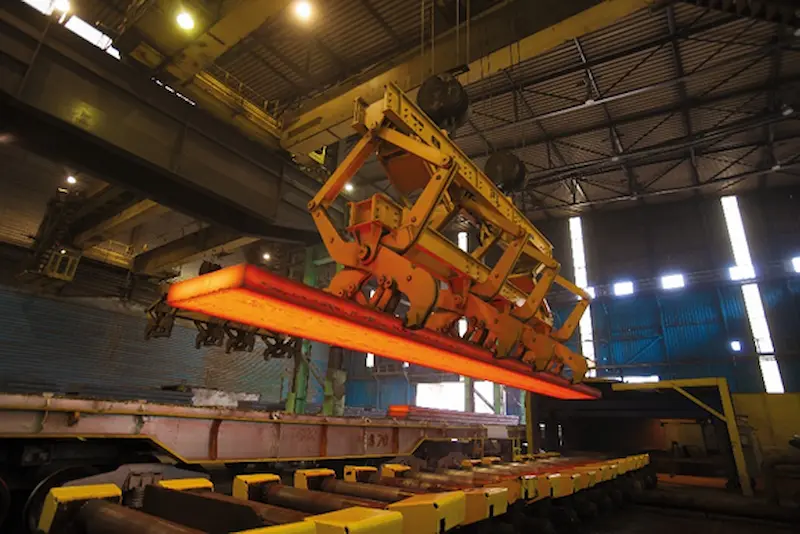
Industrial safety depends not only on operating protocols, but also on the design and maintenance of thermal facilities. Every component of an industrial plant, from furnaces and boilers to piping and insulation systems, must be designed and maintained with operational safety in mind.
Poor thermal design or insufficient maintenance can lead to heat loss, material degradation, or even structural failures that compromise both the efficiency and safety of the facility.
Thus, in industries where temperatures exceed 1,000 °C, proper technical management is key to ensuring the integrity of equipment and the protection of personnel.
THE ROLE OF ENGINEERING IN PREVENTING THERMAL RISKS
In industrial plants such as cement, steel, or petrochemical plants, heat is not just a variable in the process: it is a constant risk. Specialized engineering allows critical exposure points to be identified, appropriate insulation to be designed, and refractory materials to be applied to reduce energy losses and prevent structural failures.
Anticipation, through thermographic studies and simulations, has become an essential preventive tool for reducing incidents and extending the useful life of equipment.
KEY FACTORS FOR EFFECTIVE THERMAL SAFETY
DESIGNING SAFE SYSTEMS FROM THE ENGINEERING STAGE
Good thermal design must prioritize safety from the initial phase. This involves the proper selection of materials, the calculation of insulation thicknesses, and the integration of controlled expansion zones to prevent thermal shock fractures.
REAL-TIME TEMPERATURE CONTROL
Continuous measurement and control systems allow overheating to be detected before it poses a risk. Sensors integrated into critical structures (such as furnaces or reactors) provide accurate data to adjust parameters and prevent failures.
PREDICTIVE MAINTENANCE
Maintenance based on thermal data and historical records allows interventions to be scheduled before a breakdown occurs. This strategy not only prevents unexpected downtime, but also optimizes the use of resources and improves the overall safety of the environment.
![Supervisión de procesos industriales mediante tablet en entorno de fábrica]()
 TECHNICAL TRAINING AS A SAFETY ELEMENT
No thermal protection system is complete without specialized personnel. Continuous training of maintenance and supervision teams in the identification of thermal risks, handling of refractory materials, and use of protective equipment is essential to maintaining high industrial safety standards.
BENEFITS OF SAFE THERMAL MANAGEMENT
The implementation of a comprehensive thermal safety strategy brings immediate and sustainable benefits:
- Reduction in incidents resulting from thermal failures.
- Increased reliability of process equipment.
- Reduction in costs associated with unplanned downtime.
- Regulatory compliance and improved working conditions.
In the high-temperature industry, safety and engineering go hand in hand. Properly designing, controlling, and maintaining thermal systems not only protects facilities and personnel, but also drives efficiency and sustainability. Therefore, thermal safety is, now more than ever, an investment in operational continuity.