



What is guniting?
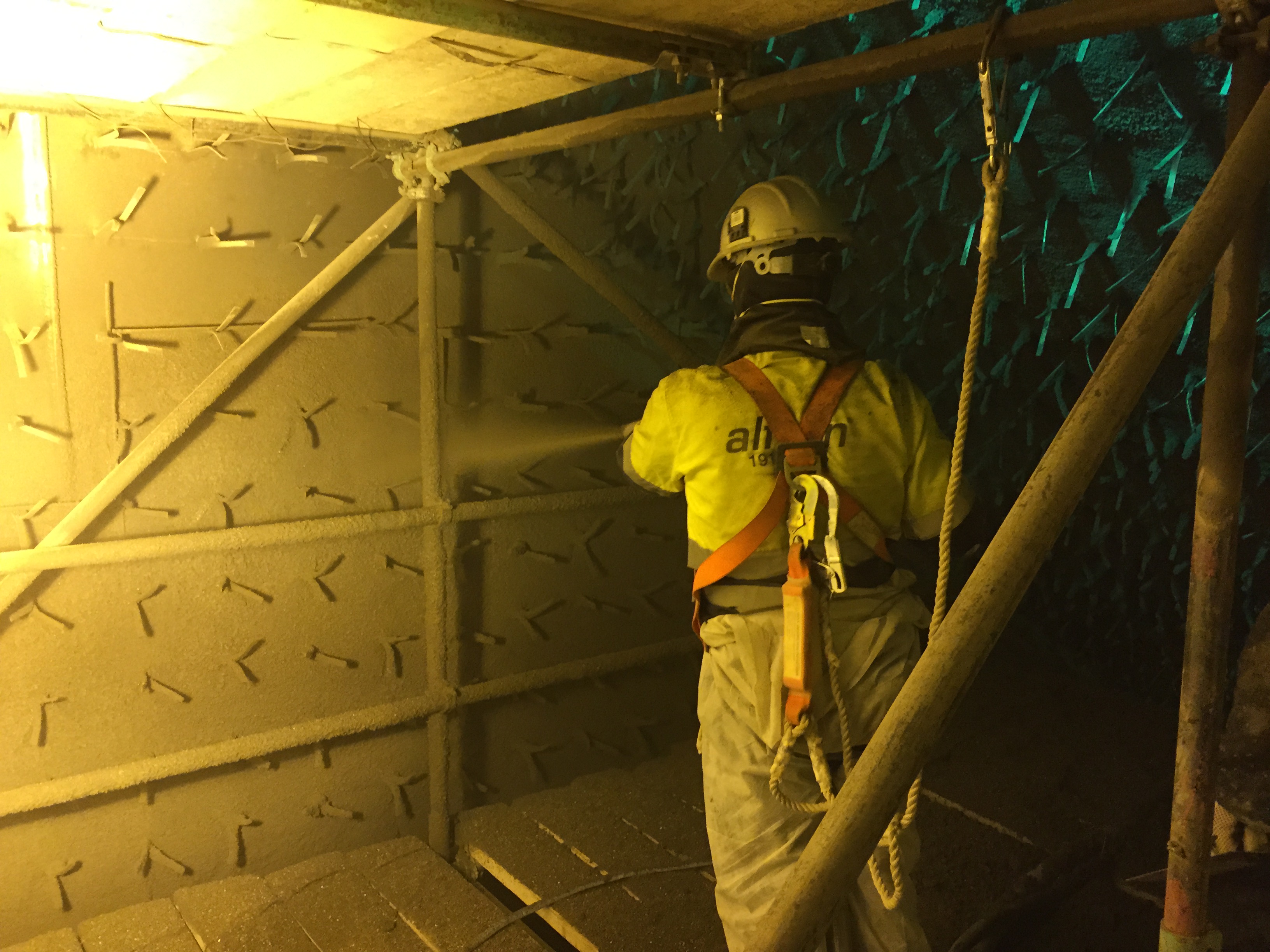
Guniting is a pneumatic projection technique used to apply refractory material onto a surface through the nozzle of a hose. The material impacts the surface at high speed, forming a continuous, compact, and resistant lining without the need for formwork.
In high-temperature industries, guniting plays a critical role: it is one of the main installation methods used in all kinds of equipment exposed to extreme temperature conditions.
How does the guniting process work?
The process consists of projecting the material through a specialized machine that propels the mixture using pneumatic pressure. The material compacts upon impact, creating a dense layer with much stronger mechanical adhesion than manual installation methods.
At Alfran, we offer products specifically developed for this type of installation, such as High Gun (dry process) and Alfranjet (wet process), ranges of high-performance materials designed for demanding industrial environments.
Types of guniting
There are two main variants depending on when the liquid is incorporated into the mixture:
1. Dry-process guniting
The concrete is transported dry to the nozzle, where the mixing liquid and air are added at the moment of projection. This method is especially suitable for smaller-scale jobs, quick shutdowns, or areas with difficult access.
2. Wet-process guniting
The homogeneous mixture (concrete + mixing liquid) reaches the nozzle and is combined with air and a specific additive that enables the material to adhere to the lining. This system reduces dust generation, provides greater application consistency, and is more efficient for large-scale projects, such as repairs on large industrial equipment.
Advantages of guniting compared to other refractory installation methods
- High adhesion on all types of surfaces, including vertical and inclined areas, without the need for molds or formwork.
- Continuous and joint-free application, eliminating structural weak points common in manual or block installations.
- Fast execution, essential for minimizing downtime in industrial facilities.
- Access to complex geometries, allowing the lining of furnace interiors with irregular shapes, sharp angles, or confined spaces where other methods are impractical.
- Layer thickness control, adjustable according to the requirements of each equipment area.
Applications of guniting in high-temperature industries
Refractory guniting is used in virtually all industrial sectors operating at high temperatures:
- Cement industry: lining and repair of equipment such as calciners, coolers, kiln hoods, smoke chambers, etc.
- Steel industry: maintenance of ladles, converters, among others.
- Aluminum and non-ferrous metals: lining of melting furnaces, reverberatory furnaces, channels, etc.
- Oil & Gas and petrochemical industry: protection of reactors, reformers, process furnaces, and high-temperature equipment.
- Energy sector: repair of boilers, incinerators, and heat-generation equipment.
In all these cases, guniting allows hot repairs or scheduled shutdown interventions to be carried out in very short timeframes, directly impacting plant profitability.
What materials are used in refractory guniting?
The materials projected in industrial environments are high-performance refractory concretes specifically formulated for each application. Key variables that determine material selection include:
- Equipment operating temperature
- Type of atmosphere (oxidizing, reducing, abrasive)
- Presence of aggressive chemical agents (slag, molten metals, gases)
- Mechanical requirements of the installation
If you’d like to learn more about the formulation and manufacturing challenges associated with these materials, we recommend our article on the challenges involved in the manufacturing process of refractory concrete.
Guniting as part of a maintenance strategy
Beyond its use in new installations, guniting is a key tool in predictive and corrective maintenance plans for industrial facilities. The possibility of applying localized reinforcement layers without dismantling the entire unit helps extend the service life of the existing refractory lining and postpone major shutdowns.
Guniting is also closely linked to industrial energy efficiency: a properly applied lining minimizes heat loss and directly contributes to reducing equipment energy consumption.
At Alfran, we incorporate spray lining into our turnkey refractory lining solutions, combining it with thermographic inspections, wear analysis, and maintenance planning to minimize the impact on our clients’ production.
Guniting as a competitive advantage in high-temperature industries
Guniting is much more than a concrete projection technique. In industrial environments, it is a high-precision technical solution that determines the durability, safety, and energy efficiency of equipment exposed to high temperatures. Choosing the right guniting method, the appropriate material, and an experienced execution team makes the difference between a long-lasting installation and one that generates unexpected costs.
At Alfran, we have spent more than 50 years carrying out refractory guniting projects across five continents for clients such as Cemex, Repsol, ArcelorMittal, Lafarge, and Saudi Aramco.
Do you have a refractory lining project? Contact our technical team for expert advice with no obligation.
Frequently Asked Questions About Shotcrete
What is the difference between dry-mix and wet-mix shotcrete?
Technically, the term “shotcrete” refers to dry-mix spraying, while “sprayed concrete” is typically associated with wet-mix spraying. In industrial practice, both terms are used to describe any pneumatic spraying system for refractory concrete.
At what temperatures can a lining made with this type of system operate?
It depends on the material used. The refractory spray concretes developed by Alfran can be formulated to withstand operating temperatures exceeding 1,600 °C, adapting to the specific requirements of each piece of equipment and industry.
Is it possible to apply shotcrete without halting production?
In many cases, yes. One of the major advantages of gunning is that it allows for localized repairs in damaged areas without the need to shut down the entire system. At Alfran, we plan interventions to minimize the impact on the customer’s operations, taking advantage of scheduled shutdowns or performing hot repairs when conditions permit.
How long does a refractory lining applied by gunning last?
The service life depends on multiple factors: operating temperature, the chemical aggressiveness of the environment, the quality of the material, and the proper execution of the process. A well-designed lining, using the right material, can significantly extend maintenance cycles and reduce long-term operating costs.
Which industrial sectors use refractory gunning the most?
The industries that use it most are cement, steel, aluminum, and Oil & Gas. In all of these sectors, gunning is a common technique used both in the construction of new facilities and in the maintenance and rehabilitation of existing equipment.